
Port, Paper, Scissors: A Code 10 Story
TL;DR:
A student part-timer at an off-licence recalls a nerve-wracking encounter when a stolen credit card triggered a “Code 10” call. But instead of confrontation, the suspect responded with calm and grace — leaving a lasting impression that reshaped the author’s view of crime, cards… and Port.
Prefer to listen? We have a Podcast here!
Part 1: Beer Money and Code 10
Back when I was a student, grants weren’t quite enough to keep you afloat — especially when the Student Union bar had your name on a barstool. To keep the pints flowing, I picked up a part-time job at a popular off-licence. The perks were meagre, but one policy stood out: if you captured a stolen credit card — one the companies flagged for retrieval — you’d get a tax-free £50 reward.
That was real money. That was beer money. And it was enough to keep my eyes sharp.
The protocol was simple: if something didn’t feel right, you made a call. The phrase was “Code 10.” You’d pick up the phone, give the code, and a card operator would talk you through the next steps. Most of the time, it was nothing. A quick confirmation. A mild shrug.
Then one day, a man came in. Alone. Calm. He spent a fair while browsing a selection of Ports, asking questions like a quiet connoisseur. Eventually, he settled on a cheaper, slightly off-brand bottle — £7.99 if I remember right.
He handed over his credit card.
Something felt… wrong. I couldn’t say what exactly — maybe it was too much interest in a bottle too cheap, or the smoothness that felt a touch rehearsed. My spider senses tingled. So I excused myself to the back room, card in hand, and made the call.

Part 2: A Different Kind of Call
“Code 10,” I said.
The operator confirmed: the card was stolen. Yes, they wanted it back. They gave me the usual instructions. But then — a pause.
She added, “You’ll need to explain to the customer that you’re instructed to cut the card. In front of them.”
Okay, I thought. Doable. I’d done this before. I’d make a small starter cut to guide the scissors and avoid any slips.
And then she added, almost casually:
“Don’t put yourself in any danger.”
Wait — what?
“Some people react badly. If they become aggressive, let them go. We’ll stop the card downstream. They won’t get their goods unless they steal them. Your safety comes first.”
Suddenly, it wasn’t routine anymore. My legs went to jelly. My hands were shaking. I hung up, left the phone off the hook, and walked back to the till.

Part 3: A Ghost in Corduroy
I returned to the man, trying to steady my voice. I told him, nervously, what I’d been instructed to do.
He didn’t flinch.
Instead, as I clumsily held the scissors, he calmly reached over, steadied my shaking hand, and said with the gentlest tone:
“Don’t worry. Be calm and cut the card. You’ve done the right thing.”
Then, with a small smile:
“It’s a risk of the job. This card’s reached the end of life. But I have plenty more.”
I snipped it. One clean cut, straight down the middle.
He nodded, then checked in gently:
“Are you alright? You did good.”
And just like that, he left the bottle at the till and walked out the door, calm as ever.
No confrontation. No panic. Just quiet surrender — the kind you only see from people who’ve played the game long enough to know how it ends.
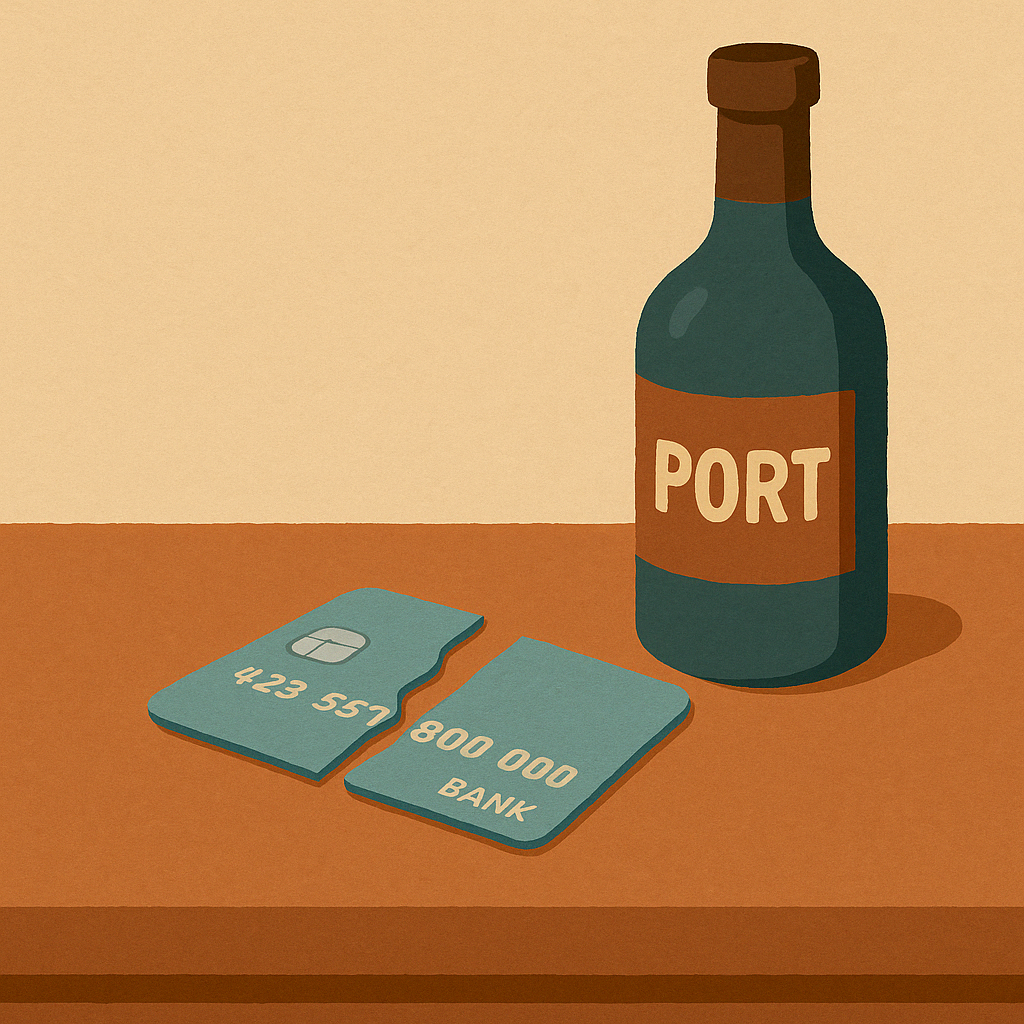
Part 4: Reflection
Although I followed the process and rules, and eventually the cheque for £50 which was shared with the staff (it was rule they had as we all had equal chance of getting a stolen card). I didn’t feel triumph, just something stranger.
Relief, yes. But also a lingering tension. Like I’d touched something just under the surface of society — where people live by different rules, with different risks. Where cards don’t just expire — they vanish, and reappear elsewhere.
I never saw him again. But I remember his calm. His resignation. His grace.
And I’ve never looked at Port — or scissors — quite the same way since.
True story, early-90s. One student. One bottle of Port. One Code 10 call I’ll never forget.

 www.muckypaws.com