


The NHS Is Modernising. Are We Remembering the Patient?
Recovering with a PICC line has made me notice something simple but important… trust. A withheld NHS call asked for my DOB before proving who they were, and a home visit introduced an AI recording app without clear consent. The problem isn’t technology… it’s assumed consent and invisible governance.

Tales from the NHS: Schrödinger’s Elderly
A quiet moment from the ward… an elderly man, “medically stable” for discharge yet unable to stand. I didn’t intervene. Helplessness, fear… and the ache of not knowing what happened next. If this is how we treat those who’ve lived full lives, what becomes of us when our turn comes?

The New Frontier of Biocomputing: Power, Ethics and the Perils of Living Machines
Biocomputing is moving from sci-fi to server racks. Using living neurons as processors promises huge energy savings… but raises hard questions about consent, sentience risk, decommissioning and biosecurity. As a cybersecurity professional, I explore how “living machines” demand new ethics, governance and infection-control standards before they ever scale.

Amstrad CPC Themed 2026 Calendar
Forget the 80s loading screens, the 2026 CPC calendar celebrates new releases from the modern Amstrad scene. Download it free and prove the CPC is still leading the 8-bit pack.

Calendar Compiler
Create gorgeous, personalised printable calendars with CalendarCompiler! This open-source Python tool lets you mix your own artwork, public holidays, and special events (like “International Day Of…” and birthdays) in a fully customisable layout. Free to use and easy to configure, just update a settings file and hit run. Grab the latest version or contribute at: https://github.com/muckypaws/CalendarCompiler

How Protecting Children Online Created a Privacy Nightmare for Everyone
The UK's Online Safety Act forces millions to hand over passport photos and selfies to private companies just to access games and social media. These companies have poor security records and often transfer your identity documents overseas without proper safeguards. Recent breaches prove this creates "honeypots" for hackers rather than protecting children, while tech-savvy kids bypass checks with VPNs. The government could solve this with a token system like DVLA share-codes, but refuses to admit their approach is fundamentally flawed.

NHS Cybersecurity and Data Handling
The NHS faces critical cybersecurity vulnerabilities that I've witnessed firsthand during extensive treatment across multiple trusts. From staff using personal devices with uncontrolled cloud sync to sharing credentials due to sluggish systems, the problems go far beyond policy failures. This article examines real-world security gaps, from "IWillHackYou" Wi-Fi networks to CDs-by-taxi data transfers, and offers practical solutions that work with healthcare realities rather than against them.

Data Breach Today, Your Problem Tomorrow: Why Victims Deserve More Than Apologies
When your data is stolen in a breach, the company gets fined, but you’re left picking up the pieces. This blog explores the need for a Digital FSCS: a restitution fund for breach victims, inspired by real-world failures and systemic neglect. Includes a free template letter you can send to your MP to call for change.

Who Owns Your Voice?
Your writing style is your fingerprint, and in the age of AI, it can be copied, flattened, or weaponised. This article explores stylometry, voice mimicry, and the risks of outsourcing your voice to AI. Are you protecting your identity... or losing it? Read on to discover why your voice might be more valuable than you think.
Personal ›


Enter the Dragon – BASIC10 Entry by Bazzargh Converted to the CPC by Muckypaws
A stunning procedural dragon created in just 10 lines of BBC BASIC for the BASIC10 Liner Competition 2026. After discovering Bazzargh’s clever use of trigonometry and plotting, I converted the code to the Amstrad CPC — proving that even 40-year-old machines can produce something truly striking from pure maths.

Knights Tour – My First Entry into the 2026 BASIC10 Competition
A look at my first entry into the 2026 BASIC10 Liner Competition for the Amstrad CPC: a Knight’s Tour solver written in just 8 lines of Locomotive BASIC. Using Warnsdorff’s heuristic, the program solves a centuries-old chess puzzle in real time while drawing the board, rendering a knight graphic, and displaying each move on screen.
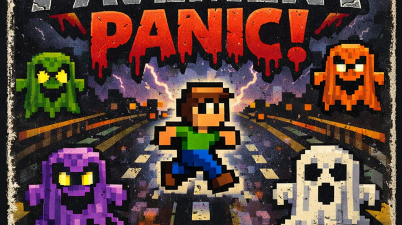
Pavement Panic – My Second Entry into the 2026 BASIC10 Competition
My second entry into the 2026 BASIC10 Liner Competition is Pavement Panic, a fast-paced ghost-dodging survival game for the Amstrad CPC written in just 10 lines of BASIC. Inspired by simple road-crossing games, it starts gently, then quickly turns chaotic as the ghosts speed up and survival time becomes your score.
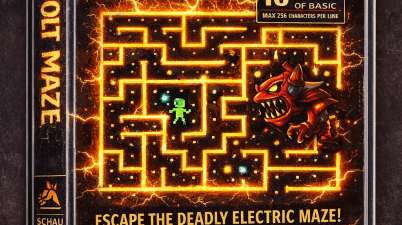
Voltmaze – My Third Entry into the 2026 BASIC10 Competition
Voltmaze is my third entry into the 2026 BASIC10 Liner Competition… a procedurally generated maze game for the Amstrad CPC written in just 10 lines of BASIC. Inspired by classic 8-bit design and powered by a stack-driven depth-first search algorithm, it’s a small game with surprisingly sharp teeth… electrified walls, flickering hazards, roaming hunters, and a new maze every level.
 www.muckypaws.com
The Tipping Escalation Ladder (Part 1 of 3)
Tipping used to be a simple thank-you for exceptional service. Today, it increasingly feels like something else… suggested by payment terminals, engineered into apps, and socially enforced in ways that quietly shift labour costs from employers to customers. In this piece, I explore what I call the Tipping Escalation Ladder and ask whether optional gratitude is becoming engineered expectation.
That Bargain SD Card Might Be Lying to You… Here’s How to Check
Cheap storage can come at a hidden cost. In this post, I explore the risks of fake and refurbished SD cards, how fraudsters manipulate capacity, and how you can test your storage on Windows, macOS, and Linux before trusting it with your data.
Enter the Dragon – BASIC10 Entry by Bazzargh Converted to the CPC by Muckypaws
A stunning procedural dragon created in just 10 lines of BBC BASIC for the BASIC10 Liner Competition 2026. After discovering Bazzargh’s clever use of trigonometry and plotting, I converted the code to the Amstrad CPC — proving that even 40-year-old machines can produce something truly striking from pure maths.
Knights Tour – My First Entry into the 2026 BASIC10 Competition
A look at my first entry into the 2026 BASIC10 Liner Competition for the Amstrad CPC: a Knight’s Tour solver written in just 8 lines of Locomotive BASIC. Using Warnsdorff’s heuristic, the program solves a centuries-old chess puzzle in real time while drawing the board, rendering a knight graphic, and displaying each move on screen.
Pavement Panic – My Second Entry into the 2026 BASIC10 Competition
My second entry into the 2026 BASIC10 Liner Competition is Pavement Panic, a fast-paced ghost-dodging survival game for the Amstrad CPC written in just 10 lines of BASIC. Inspired by simple road-crossing games, it starts gently, then quickly turns chaotic as the ghosts speed up and survival time becomes your score.
Voltmaze – My Third Entry into the 2026 BASIC10 Competition
Voltmaze is my third entry into the 2026 BASIC10 Liner Competition… a procedurally generated maze game for the Amstrad CPC written in just 10 lines of BASIC. Inspired by classic 8-bit design and powered by a stack-driven depth-first search algorithm, it’s a small game with surprisingly sharp teeth… electrified walls, flickering hazards, roaming hunters, and a new maze every level.
MHS35 Touchscreen LCD on Raspberry Pi – 64 Bit OS
Bought during lockdown, forgotten in a box, found at the weekend. Getting the MHS35 3.5" TFT touchscreen working on Raspberry Pi OS Trixie (64-bit) is straightforward once you know the correct approach. The instructions in the box are out of date, the product page has been updated but leaves gaps around rotation and touch recalibration. This guide covers the complete setup from fresh Trixie install to a correctly oriented and calibrated display, including what the installer script actually does under the hood and why.
When Payment Design Becomes Persuasion (Part 3 of 3)
A modern payment terminal asking for a tip may look like a simple choice. But behind that screen sits decades of behavioural research, UX design, and subtle psychological nudges. As tipping prompts spread through global payment systems, the question becomes harder to ignore: are we choosing to tip… or being guided there by design?
The Tipping Escalation Ladder – Can It Be Reversed? (Part 2 of 3)
After exploring the idea of the Tipping Escalation Ladder, one question kept appearing: can tipping culture actually be reversed? Surprisingly, the United States once tried to ban tipping entirely. This follow-up looks at the forgotten anti-tipping movement of the early 1900s and how modern payment systems and delivery platforms may now be reshaping tipping expectations once again.